
VOCATIONS IN THE CHURCH
By Rev. Fr. Petros Mwale (Mzuzu Diocese – MALAWI)
INTRODUCTION
“Fr. Petros, what are the main vocations in the Catholic Church? Please help me as we are drawing closer to the Vocations Sunday Celebrations.” – Jacob (Radio Maria MALAWI)
—
Remember to subscribe to my blog https://catholicdoctrines.law.blog/ and like my Facebook page to get latest Catholic Doctrines click here
https://m.facebook.com/CatholicDoctrinesWithRevFrPetrosMwale/
Join us on Telegram to Interact and share your faith with more than 150,000 Catholics https://t.me/joinchat/IsvVPewPFmdIxm04
RESPONSE
Dear Jacob, The word vocation derives from the Latin vocare “to call.” God calls everyone to follow Him. Man desires and God does his will. The Catholic Church recognizes four main vocations: Priesthood, Religious Life, Marriage and Single Life. You were created to be in relationship with God, and that is His greatest desire for you.
As your relationship with God grows, He will continue to draw you deeper into this relationship, and call you to become more like Christ, to love Him more, and to love others through service. In all these things, you will experience God calling you to a particular vocation.
THE FOUR MAIN VOCATIONS
1. PRIESTHOOD
A Catholic priest is a male ordained minister of the Church. Because they give their lives in total service to the Church, priests embrace the gift of celibacy and commit to a life of prayer.
DUTIES:
😁Proclaim the Good News.
😁Teach the Catholic faith.
😁Minister the Sacraments.
😁Work to build up their local faith community.
😁Lead their faith community in worship.
Most priests will minister in a parish setting, while others may serve as chaplains to universities, hospitals, prisons, the armed forces and other industries.
2. RELIGIOUS LIFE
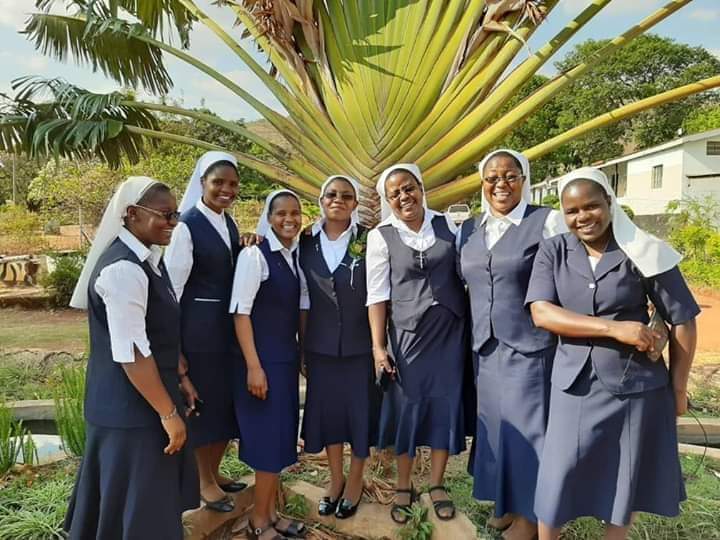
A religious priest, brother or sister (nun) commits his or her life to sharing in the life and mission of their religious community.
😁They embrace the call to poverty, chastity and obedience, and nurture their call through a life of celibacy, faith, prayer and service.
😁They serve in areas such as education, health care, parish, youth ministry, aged care, spirituality, pastoral ministry, social work, amongst the poor and as a contemplative, and many will serve as missionaries in other cultures.
Depending on the religious order, they may dress in ‘normal’ clothes or in a habit.
3. MARRIAGE
A married person lives a vow of faithful love to a spouse through the sacrament of marriage. Husbands and wives share a self-giving, love-giving and life-giving relationship with their spouse, and are committed to helping their spouse grow to human and Christian maturity.
😁They seek to form a family home, and are together the first teachers of their children in Christian faith and values.
😁May serve in their parish community or in the Church in a number of different ways.
4. SINGLE LIFE
A person called to single life comes to believe that remaining single is the true and right way to faithfully live his or her baptismal call.
😁They embrace the gift of celibacy while living alone, with a family or with others who are single.
😁They are able to devote time and energy in service of others.
😁May serve in their parish community or in the Church in a number of different ways.
CONCLUSION
In each vocation, the person lives a life of faith and prayer to continually grow in relationship with God. The Church recognizes that each vocation is equal in the sense that no vocation is better or less than any other. However, because God calls you to a particular vocation – whether marriage, priesthood, religious life or single life – that vocation is the best one for you, and the one that will ‘fit’ you best and make you the most happy.
———–
Receive my priestly blessings from St. Cecilia Catholic Parish (Mpherembe – MALAWI)
————
By Rev. Fr. Petros MWALE (Feedback +265884150185: WhatsApp only)
————
SOURCES
Fr. Thomas J. McGovern, Priestly Identity: A study in the theology of priesthood – Dublin: Four Courts, 2002.
Schoeneberger, B. A., & Evan. Suffering with Joy: Conforming Ourselves to the Will of God, New York: Cornell University Press 2011

 Catholic Doctrines
Nice exposition Father.
LikeLike