
By Rev. Fr. Petros Mwale (Mzuzu Diocese MALAWI)
INTRODUCTION
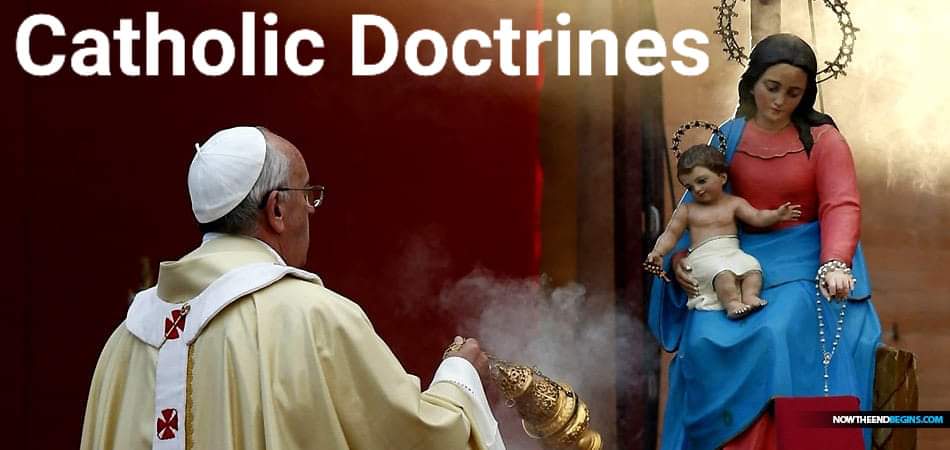
“Fr Petros, do Catholics worship idols or statues? We have holy images of Saints, Jesus and Mary in our Churches, is this not against Exodus 20:4: ‘You shall not make an image and worship it?’ Am confused father, please help” – Sr. Grace (Chikwawa Diocese – MALAWI).
Remember to subscribe to my blog https://catholicdoctrines.law.blog/ and like my Facebook page to get latest Catholic Doctrines click here
https://m.facebook.com/CatholicDoctrinesWithRevFrPetrosMwale/
Join us on Telegram to Interact and share your faith with more than 150,000 Catholics https://t.me/joinchat/IsvVPewPFmdIxm04
RESPONSE:
- THE ACCUSATION
Sr. Grace, seeing Catholics kneeling before statues and other sacred art, some have accused them of idolatry – the giving to another creature or object the worship due to God alone.
Some even claim that the Catholic Church removed the Second Commandment: “You shall not make for yourself a graven (loosely defined as “carved or etched”) image” – Lev. 26:1, so that statue worship would seem permissible.
HOW true are these accusations?
- TOWARDS THE SOLUTION:
These are serious charges, but are completely unfounded.
A. THE CATECHISM
First, let’s be clear: Catholics absolutely DO NOT worship statues or images in any form. Worship is reserved for God alone. Idolatry in ANY form is absolutely condemned. The Catechism of the Catholic Church (CCC 2110-2114) spells this out clearly. Anyone who suggests otherwise is mistaken and seriously misrepresents Catholic teaching.
B. THE POWER OF SACRED ART
Sacred art is used to evangelize, catechize and inspire. It is also used to show reverence and honor for God and His saints. When a Catholic kneels or bows in prayer before a statue, they are not worshipping it in any way whatsoever. They are using it as a person might use a picture of his family to recall them, even pray for them, when he is not with them. He obviously does not consider a picture of his children as being his actual children, but simply a reminder of them. And so it is with Sacred art in any form. It is used ultimately to raise our hearts and minds to God, to aid us in prayer.
B. HISTORICAL EVIDENCE
Catholics do not worship idols, but have a long tradition of using statues in their churches, because thousands of years ago, people were unable to read and write. The average person could not read and understand the stories in the bible for themselves, until the early 1900s. Priests and scribes were the only people in the Church who were educated enough to read and understand the bible.
Therefore, the church used statues, paintings and stained glass windows to visually portray the stories in the bible and show what people from that time period may have looked like. The stained glass windows in a Church often depicted the stories from Jesus’ life visually, so that everyone, including little children, could understand who Jesus was. This history is so unique, and must be protected at all cost.
C. BIBLICAL SUPPORT
In fact, shortly after giving the Ten Commandments in Exodus 20, God commands Moses to make two large, golden statues of cherubim for the Ark of the Covenant (Ex 25:1-18, and similarly for the temple in 1 Chr 28:8-19). Moses was also commanded to make “a bronze serpent, and set it on a pole; and if a serpent bit any man, he would look at the bronze serpent and live” (Num 21:8-9). Centuries, later when SOME began to worship it as a god (“Nehushtan”), King Hezekiah destroyed it (2 Kgs 18:4).
CONCLUSION
Our statues of Jesus, Mary and the saints are ways that Catholics honor and preserve their memory, through visual means in our every day life. Remember the expression, “out of sight, out of mind.” As Catholics, we never want Jesus, and Mary, and the example of the saints to be out of sight or out of mind, but be forever enduring in our hearts, and in our every day lives.
Receive my Priestly Blessings from St. Cecilia Catholic Parish (Mzuzu Diocese – Mpherembe)
Rev. Fr. Petros Mwale – Feedback: +265884150185 (WhatsApp only)
SOURCES
Beale, G.K, We become what we worship: A Biblical Theology of Idolatory, London: InterVarsity Press, 2008.
Groesschel, Craig, Sacred Art, New York: Harvest House, 2011.
Catechism of the Catholic Church, 2nd ed. Washington DC: United States Catholic Conference, 2000.

 Catholic Doctrines