
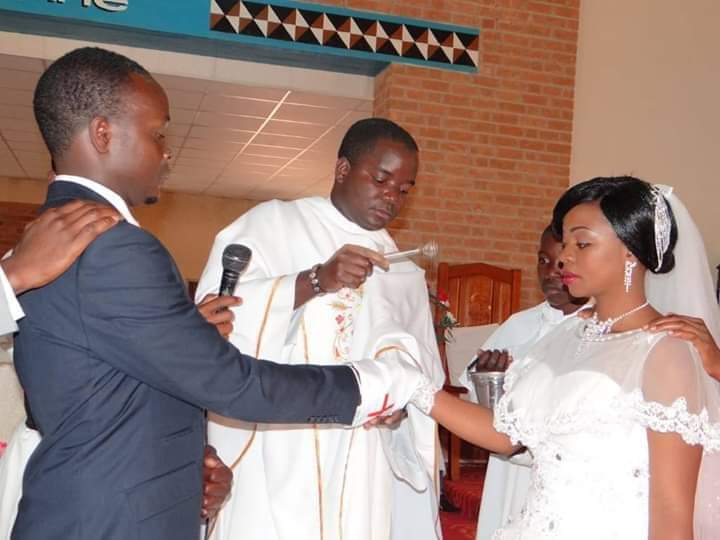
By Rev. Fr. Petros Mwale (Mzuzu Diocese – MALAWI)
INTRODUCTION
“Can Catholics be Prohibited from Marrying (wedding) in Lent and Advent?” – Caroline (YCW – Mzuzu Diocese, MALAWI).
RESPONSE
Dear Caroline, I am guessing the wedding preparation is started and you are trying to find a date and none works well, except during LENT or ADVENT.
- UNFAIR PRACTICE
In some parts of the world, Catholics are routinely informed that they cannot marry at all during LENT and ADVENT, because (so they are told) the penitential and/or preparatory nature of these times renders them inappropriate for the joyous celebration of a wedding. While it’s impossible to compile statistics on this, it seems to vary from diocese to diocese, or from parish to parish. What’s going on here? Do the faithful have the right to schedule their weddings during Lent or Advent, and if not, why not?
- RIGHT TO RECEIVE SACRAMENTS
Catholics have, in general, a right to receive the sacraments. This general rule is first articulated in Canon 213, in the section of the code delineating the obligations and rights of all the faithful (i.e., both clergy and laity). It states broadly that the Christian faithful have the right to the spiritual goods of the Church, among which it specifically mentions the sacraments.
More details are then provided in the chapter of the code discussing the sacraments themselves. Canon 843.1 states clearly that Catholics cannot be denied the sacraments if they opportunely ask for them, are properly disposed, and are not prohibited by law from receiving them. So the question to be asked is, are Advent and Lent “inappropriate times” for the celebration of the sacrament of Catholic matrimony?
- THE CHURCH’S TEACHING
In the current (1983) Code of Canon Law, there is certainly nothing to indicate that any particular days of the year are definitively off-limits for the celebration of weddings. But in 1988, the Congregation for Divine Worship published a document “Concerning the Preparation and Celebration of the Easter Feasts” which explained authoritatively that there are two days when marriages may not be celebrated. On Good Friday, “All celebration of the sacraments…is strictly prohibited, except for the Sacraments of Penance and Anointing of the Sick.” And as for Holy Saturday, “The celebration of marriages is forbidden”
- THE AUTHORITY OF THE TEACHING
The Congregation’s document is intended to apply universally and thus cannot be ignored by diocesan bishops, much less by parish priests. Consequently, if any Catholic ever asks his pastor to schedule a wedding on Good Friday or Holy Saturday, the answer must be NO. Refusal would thus be fully in accord with Canon 843.1.
CONCLUSION
Telling Catholics that they can’t get married for nearly an entire month (during Advent), and/or for the entire calendar period between Ash Wednesday and Easter, obviously constitutes a very loose interpretation of the restrictions contained in Canon 843.1, and is thus a policy unsupported by canon law.
Receive my Priestly Blessings from St. Cecilia Catholic Parish (Mzuzu Diocese – Mpherembe)
Rev. Fr. Petros Mwale – Feedback: +265884150185 (WhatsApp only)
SOURCES
Coriden, James A., Thomas J. Green. And Donald E. Heintschel. The Code of Canon Law: A text and Commentary. New York: Paulist Press, 1985.
Congregation for Divine Worship; “Circular Letter Concerning the Preparation and Celebration of the Easter Feasts: Paschales Solemnitatis” Rome: St. Paul Publications, 1998.

 Catholic Doctrines